Thursday, December 19, 2013

Capes & Clockwork author interview with Konstantine Paradias

Capes & Clockwork author interview with Konstantine Paradias
 
 
Capes & Clockwork is an upcoming anthology from Dark Oak Press which fuses the beauty and elegance of steampunk with the action and adventure of the superhero genre. As part of the ‘gearing up’ to the release of ‘Capes & Clockwork: Superheroes in the Age of Steam’, I’ll be interviewing some of the great authors that contributed.
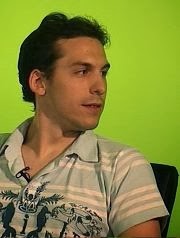


And now on the stage, right here for your reading pleasure is…. Konstantine Paradias


Konstantine Paradias is a Greek science fiction and fantasy writer. His short stories in English have been published on OHP's Petulant Parables Anthology, Breathless Press' Shifters anthology, EveryDayFiction.com, Schlock! Magazine, Static Movement's Behind Closed Doors and Long Pig anthologies. His first fantasy ebook, Stone Cold Countenance, has been published by bibliocracy. com.

 
At what age did you start writing?

If I’m not mistaken, I started writing when I was 14 (though I might have made a few attempts when I was 12, when I and my brother were trying to come up with a cartoon plot that we were going to call THE ADVENTURES OF KITTENCHILDE, THE RICHEST KITTEN EVER). It had happened a few weeks after I had first read through War Of The Worlds, which was the very first, honest-to-God science fiction book I’d ever read and it had blown my mind.

My first attempt at writing a book was 200,00 words long, in terrible English (as I was still learning the language) and it had begun as fanfiction, then derailed itself somewhere in the 350-page mark. I gave up on writing for 2 years (with the occasional short-if terrible-fantasy story written to pass the time). It wasn’t until I was 17, when I earnestly tried my hand at actually writing an original short story that I could call my own. It was supposed to have been the first book in a fantasy-parody series, titled THE CHRONICLES OF CHOPPINGSTAN, starring every fantasy stereotype ever, including (but not limited to) a Drizzt Do’Urden pastiche that I called The Unwashed Ranger.

While I did begin writing the book in Greek, I unfortunately never finished it. It was about 3 years later, when I was 20 years old, that I began to try my hand at writing on a semi-professional level and began working on my first book,  STONE COLD COUNTENANCE (a fantasy novel) and a rough version of a science fiction book, which I called HER FRACTAL MAJESTY.

While STONE COLD COUNTENANCE has since been completed and its first 6 chapters are available on my blog, I am still looking for a publisher. As for HER FRACTAL MAJESTY, I guess I am not ready to give it the attention it deserves. It might be because I’m too emotional about this book and I will never think that it will ever be good enough to give it the attention or the lustrous finish I believe it deserves.

 
How many words do you write per week?
That depends, really. There was a time (before I actually began working on a book) when I would manage to write as much as 6 or 8 thousand words a week every week for about a year and a half, before I began to exhibit symptoms of serious burnout.
It was the time when I still had no managed to publish any of my stories and had found the only remedy to be searching for anthology calls or magazine submissions through Ralan or Submissions Grinder, writing a story for every single call that caught my eye and I could come up with. I’d get the story done in a day (two, tops) and then I’d edit it for another day, before submitting it. Finally, I would also write a blog post, because I wanted to maintain a schedule, while working on a comic book script (details on question 6) AND writing reviews for Bestsciencefictionstories.com.

As you might guess from the previous paragraph, this much writing might be good exercise, but it’s unmoderated and in general, not a good thing. I was pretty much destroyed by the end of the 18th month doing this, so I decided to switch directions and focus on working on my current novel, while spacing out my blog updates.
Now my weekly word output is down to 5000 words, but I’ve broken it down into smaller segments, instead of just exploding all over my keyboard almost every single day. I still don’t take Sundays off, though.


Do you have a routine when you write?

If I’m working on a short story, the routine goes like this:

·         Look for anthologies

·         Find an anthology with a theme that fits
·         Jot down the first thing that comes to mind. If that fails, check what they DON’T want and work borderline on that. Risque moves like that cost absolutely nothing and help you work those thinking muscles.

·         Write the story. Show it to a friend who you’ll know he hates it. If they don’t, you’re on the right track.

·         Edit the story. Try not to stab your eyes in, because you will feel embarrassed at all your typos and other errors.

·         Submit and pray to your God for an acceptance.

·         If rejected, shrug and repeat.

If I’m working on a book, my routine goes like this:

·         Come up with a story idea.

·         Set up a schedule (target word count, personal deadline, a word-per-day output)

·         Start writing.

·         Realize the folly of your plans and that a 350,000 word count with a 5,000 word-a-day output and a January deadline was a terrible, unrealistic idea in the first place.

·         Hate yourself.

·         Stop hating yourself and bump it down to a manageable level.
·         Find cover artist.

I have found it mostly works…mostly.


Who were your inspirations?

That’s a tough one, mostly because I have no idea where to even begin. H.G. Wells was my very first science fiction writer, but I didn’t REALLY realize I wanted to become a writer more than anything until I stumbled on an old, dog-eared omnibus of Moorcock’s Elric of Melnibone, which blew my mind into a million pieces, amking me wonder what the hell people even saw in lord of the Rings in the first place.

I started writing fantasy, while reading everything from Moorcock I could get my hands on, until a friend of mine gave away his fantasy books (as he was going through a religious phase, don’t ask) and I discovered a tattered copy of Zelazny’s Lord of Light. After reading it until the pages wore down to ink and dead tree pulp, I began trying my hand at space opera, while looking deeper into science fiction’s roots.

A man working at the local bookstore, whom I inquired whether he had heard of any good sf books, passed me a copy of Sirens of Titan which he described as ‘just the thing I need’. Previously unfamiliar with Vonnegut’s majesty, I began reading, finished the book in 10 hours then went back to the store and bought anything else I could find on the shelves.
I was 16. And on the shelf next to the Cat’s Cradle, there was a comic book, misplaced by a customer. It was called Bloodfeud and it starred Spawn, written by Alan Moore. I picked it up, having only heard of Alan Moore by name. After an extended period of paralysis by awesome, I decided I just had to try my hand at writing comics, eventually.


What book do you read over and over the most?

There’s the Sirens of Titan (4 times in a row), Chuck Pallanhiuk’s Choke and Lullaby (4 and 5 times in a row, respectively), Thomas Ditch’s 334 (3 times), Zelazny’s Lord of Light (12 times) and Michael Moorcock’s Stormbringer of the Elric Saga (lost count).


Do you have a dream project that you want to write in the future?

Yes, I do. There’s actually more than a couple of them, but I won’t go into detail because, you know, space. But so far my dream projects include:

·         A limited comic book series, titled Rise and Fall, where underdog, z-list superheroes are forced to save the world, when its big-hitters fail it (for a complete outline, go here: http://shapescapes.blogspot.com/2013/02/what-i-think-about-stuff-things-ill-do.html )

·         A story cycle, titled THE FUTURE SUCKS, starring destitute, drunken time travelers trading stories about possible realities.

·         INVICTUS-THE IRRESPONSIBLE SUPERHUMAN comic book series, starring a superhero who looks like Terry Crews, has an attitude like Hulk Hogan and acts like Homer Simpson, while trying to prove himself as an honest-to-God champion.

·         A comic book series, titled POST RAPTURE, starring despicable people in the days before the battle of Armageddon and finally…

·          A single episode of Doctor Who. I mean, just one. It doesn’t even have to be important. Like, it turns out it was all just a dream, in the end. O please, BBC, why won’t you read my e-mails?


What genre do you prefer to write?  To read?

I personally prefer science fiction, both to write and to read. I prefer to write it, mostly because a man I once knew, wise to the ways of sf (but little else) once told me how ‘Science Fiction is, essentially, socio-political satire’. I think it was those 7 words that changed everything around for me and made me want to find out more about the genre. And the more I looked into it, the more I fell in love with it and its relevance.

I love writing science fiction because it’s the perfect way for me to poke fun or to look at everyday human failings, including my own; but I love to read it, because the masters of the genre (Bradbury and Asimov to Egan and Doctorow) have given me long, thoughtful glimpses into what’s to come.
And even though it scares the pants out of me, I can’t help but being drawn to it.
 
Do you prefer writing short stories or novels?  And why?
I personally like short stories better, mostly because short stories are the telling of events. They can be world-shattering of insignificant, they can be immense historical shifts or mindless, emotionless disasters. But above all, a short story gives you absolute free reign over your narrative, of the kind you cannot achieve in a novel.
A novel is a fiercely structured creation that follows its own rules and controls you at the 30,000 word mark. If you know what you’re doing, you won’t fight it and instead let it take you to all the wonderful places you wrote about and live through the adventures you set up yourself.

But a short story? Now that’s another thing. A short story is more like a car crash, or a freak occurrence. It happens at a distant corner of your mind and exists in and of itself. It is under your complete and utter control and in many ways, it lets you play God. If novels are ecosystems, then short stories are petri dishes that you can chuck into the fire at your whim and watch them burn, before you move on to the next one, like some desensitized evil god.


What are you working on now?

I am currently working on a novel, called the CHROME HORDE. It is the story of a post-apocalyptic world after its fossil fuels have mysteriously disappeared in a single night, leaving human civilization without an alternative and causing it to crash and burn.
Sixteen years later, from the depths of Mongolia, a familiar terror rises from the rubbgle and rides down across the Asiatic interstates, crossing the A353 through China, to Kazkahstan and the West. Cutting a burning swathe of destruction, the resurrected Mongol Horde, with Batu-Khan (the last direct descendant of Genghis) at its head, return to drain the bad blood out of the dying world, to cut at the diseased flesh of it and to leave behind clean, virginal parchment on which the tenets of the new civilization can be written down.

It starts with a sputter, proceeds to a bang and ends…God, I’m not sure, I need to get back to you on that. It keeps pulling all those fast ones one me…
 
What 3 things do you feel every aspiring writer should know?
THING ONE:  There is no such thing as a rockstar writer. You are not going to come up with that one hit single short story or novel that will make you rich and even if you do, this will probably spell your doom. Be prepared to try, to fail, to give up (I’ve given up so much I’ve given up on giving up, to be honest), to have a fit and then go back to your keyboard and keep writing. Come up with a program and follow it. Try to get at least 700 words in every day, or try to get a gig writing (even if it’s gratis) for a website, so you can work on developing your writing muscles.
THING TWO: Get used to rejection. And I mean like, TONS of it. For every 100 stories you write, perhaps 10 will make the cut and be published. Of those 10, perhaps one will actually be bought for real money. That is more than most people get and you should be grateful for it. Cherish those rejection letters that contain even a short explanation on why a story was turned down, because it means the editors gave enough of a damn to squeeze some time into their day to tell you what was wrong with your story. Work your way around that, or apply those bits of advice to your next project.
Rinse in your own tears, repeat.
THING THREE: Don’t just try everything or TRY to get things done. Just get them done and do at least one thing that’s outside your comfort zone. If you work with fantasy, try sf. If you’re into horror, try your hand at erotica. Do one of everything and get it done, no matter how bad you think you’re doing. You don’t know it yet, but you’re getting better at it. And one day, before you know it, you will find yourself using all those wonderful things you’ve learned in your genre of choice and the results will…be…GLORIOUS!


Thanks so much for yout time, Konstantine.

Look for Konstantine Paradias' story,

Beneath Familiar Suns 

in the upcoming

Capes & Clockwork.


Tuesday, December 10, 2013

Capes & Clockwork author interview with David J. Fielding

Capes & Clockwork author interview with David J. Fielding
 
Capes & Clockwork is an upcoming anthology from Dark Oak Press which fuses the beauty and elegance of steampunk with the action and adventure of the superhero genre. As part of the ‘gearing up’ to the release of ‘Capes & Clockwork: Superheroes in the Age of Steam’, I’ll be interviewing some of the great authors that contributed.

 
 And now on the stage, right here for your reading pleasure is…. David J. Fielding


David J. Fielding has worn many hats during his time on this spinning globe. He is the actor who played Zordon on the original Mighty Morphin’ Power Rangers television series. Mr. Fielding is also a talented voice actor who has created characters for many video games including Empire Earth, Dungeon Siege: Legends of Aranna, Zeus, Poseidon, and Anvil of Dawn.
An accomplished actor and comedian, David currently performs regularly with Player One, an improvisational comedy troupe at the Arcade Comedy Theater located in downtown Pittsburgh, Pennsylvania.
He is a rotating actor for Mysteries Most Wanted, a popular murder mystery dinner theater troupe and also authors many of their most popular mystery comedy musical plays.
David J. Fielding has three decades of stage and film experience. He has held many leading roles including Salieri in Amadeus and Quentin in After the Fall.
He holds 2 degrees in acting:
~Bachelors of Acting from Texas State University
~Masters in Fine Art from the University of Pittsburgh, Pennsylvania.
Currently, David is busy polishing several projects including an epic super hero novel, several short stories, and a number of fresh musical murder mystery plays.


Do you plot out your stories or just make it up as you go?
I guess there is the “sculptor” aspect to how I approach my writing – that is, the story I think is there, complete in my head, and it’s my job as an artist to chip away the bits that are obscuring the finished work. I believe that the story – from initial idea to finish – is a process of revealing, and so I trust that my brain and creativity is leading me to uncover it… so, very little plotting out goes on for me – I have tried that technique, but I’ve found that if I put it all down in notes or on post-its I get bored with it, and those stories falter and many go unfinished. I like the discovery of writing a story, and like the reader I am drawn into the story during the process of writing it.
Do you listen to music while you write and if so, what do you listen too?
Music is such a big part of my writing process – in fact a lot of ideas I get come from snippets or passages of music. I listen to a lot of cinematic soundtracks – the music of John Williams, James Newton Howard, James Horner, Hans Zimmer, Jerry Goldsmith and many others – they lift my mind into a place of epic storytelling, one that is filled with grand images and the type of story I am drawn to, ones with epic or mythic themes.
Is there a book or book series that you recommend to people?
I like epic stories. When I was going to grade school in Colorado Springs, I was introduced to the Greek myths and heroes such as Jason, Perseus, Odysseus – and the larger than life adventures they had. That is the kind of story I am drawn to, those that have a mythic quality. I feel this type of story impacts us on two levels (if not more) one being the simple straightforward adventure, the second being the subconscious life-lesson we can all benefit from. For me, Stephen King’s Dark Tower series has that kind of quality. It works on the surface and underneath and by the end of it, you feel you have journeyed far.
At what age did you start writing?
When I was growing up I had a fascination with drawing and comic books. I would spend hours recreating images from Marvel and DC and adding my own descriptive text or dialogue – granted a lot of it was very simple J
From there I graduated to actual story-length illustrations and booklets, mostly drawn to amuse my brother and sister, and then later still when playing rpg’s with friends I started writing intros and prose to describe events and some of the more dramatic happenings that we player’s experienced in the games. I also started writing short stories about this time, trying to emulate some of my favorite authors including Stephen King, Stephen R. Donaldson and some of the pulp/serial authors such as Lester Dent and Mack Bolan.
So long story short, I’ve been writing since about the age of 14 or so.
 
How much of you is in your characters?
I think there is a bit of me in each of my characters, at least the protagonists. I read a lot of my writing out loud and tend to write dialogue as I hear it coming out of my mouth. So to that extant I would say there is a bit of me in each of my characters.
If you could live the life of one of your characters, who would it be?
I think I would like to meet or talk with Jack Miller. He is the main character in my superhero novel, Vigilance. Vigilance tells the story of a Hero War, where superheroes became viewed as a threat and were fought and eliminated by governments and the military. Jack is a superhero whose ability is not to be seen – and so he escapes capture or death during the war and survives a number of years until he can confront those who set the war in motion.
I think I’d like to bring Jack to life, simply because I put him through so much emotional turmoil and pain. The guy deserves a break J
What genre do you prefer to write?  To read?
Again, I prefer grand storytelling, big ideas and big adventure. Martin’s Game of Thrones series or Donaldson’s Thomas Covenant series, Riordan’s Percy Jackson books, Sanderson’s The Way of Kings. I like to tell stories that lead people on adventures, to take them out of the troubles of their lives, if even for just a few hours.
Do you prefer writing short stories or novels?  And why?
A few years ago I would have said novels – because I had grand ideas about being a published ‘novelist’. I guess the title of novelist carries a certain weight, a higher status if you will. But I’ve found the process of writing short stories more rewarding and more successful. I have had a number of my stories published while my novel sits waiting a further revision. I still like the idea of a novel length story and will continue to write with that goal, but for now… short stories are much more at the forefront of my creative writing.
What are you working on now?
I am currently writing a series of stories dealing with the paranormal, and my lead character is a reluctant ghost-hunter type character. He has the gift, or curse, of being able to hear the dead… and he relates these experiences to a friend in a sort of diary type fashion. Each of the stories so far deals with the mystery of who the deceased came to be and the messages they reveal and how these encounters weigh heavy on the protagonist.
What 3 things do you feel every aspiring writer should know?
1.      That they are doing the best they can at the present time, and if they work at it, they will improve.
2.      That not everything they write will be good, not everything they write will be bad, but each blurb or story or chapter is necessary for them to set down, to hone their skill and to also re-visit to learn from mistakes or re-work that same idea at a later date.
3.      That they should not keep things hidden “until they are done”. Get it out there, let friends and family read it. Listen to feedback and learn to take what is good from it and the bad too… to go back and see if the changes that are suggested are needed, and if they are, then make the changes. The stories you write are for the reader, after all, not just yourself. You are a good audience, but your readers are better.
 
Thanks so much for yout time, David.
Look for David J. Fielding's story, 
At the Quiet Limit of the World
in the upcoming 
Capes & Clockwork.


Wednesday, December 4, 2013

Zeus has been unleashed!


The First Hawke Girls' book is out!!!
The Lightning Bolts of Zeus


A year and a half after I started writing it, the first Hawke girls' book is finally out. Ok, maybe in the publishing world that could be considered fairly quick. After all, my first novel took 5 years to write, a year and a half to publish the first time...then the publisher goofed up and later folded. Then came another year of work until it was re-released by the good folks at Dark Oak Press.

So, I'm not complaining. :) 

LBoZ isn't my first foray into the steampunk genre but it is my largest/longest. With that said, this is only the first in a series. The second book is underway.

The fun thing about this steampunk novel is that you don't have to know or understand steampunk in order to read it. The elements that you'd find in most steampunk stories are there but maybe wrapped up in a different way.

With that said, please take a look and tell me what you think.

And here is a fun fact.... all of my stories contain references to my children or other important people in my life. Sometimes a name or a date, but they are all hidden in there. Can you find any of them?


Monday, November 18, 2013

Capes & Clockwork author interview with Jeremy Hicks

Capes & Clockwork author interview with Jeremy Hicks
 
 
Capes & Clockwork is an upcoming anthology from Dark Oak Press which fuses the beauty and elegance of steampunk with the action and adventure of the superhero genre. As part of the ‘gearing up’ to the release of ‘Capes & Clockwork: Superheroes in the Age of Steam’, I’ll be interviewing some of the great authors that contributed.


And now on the stage, right here for your reading pleasure is…. Jeremy Hicks
 
 
A native of Alabama, Jeremy Hicks spent several years working as a field archaeologist throughout the Southeast before teaming up with his longtime friend and co-author, Barry Hayes, to realize a shared creative dream.  The writing team of Hicks & Hayes created an original horror-fantasy environment (Faltyr™), wrote a screenplay (The Cycle of Ages Saga: Finders Keepers) to introduce it, and then adapted it into a novelization of the same name.  As a result, their first novel will be published by Dark Oak Press and Media in the summer of 2013.
As co-founder of Broke Guys Productions, Jeremy has co-written three other as-of-yet unproduced screenplays, including the first sequel to CoAS: Finders Keepers.  Another of his screenplays, a darkly comedic horror tale about meth zombies plaguing a trailer park in Alabama, placed as a Top Finalist in the 2011 Cherub Films Horror Screenplay Competition under the title Night of the Living Rednecks.

 Jeremy Hicks is also a short story writer, poet, and infrequent Yahoo! contributor.  Three of his poems (It’s Beginning to Look a Lot Like Fascism, Do Not Waver, and Midnight Dzohkar) are available online via Yahoo! Voices.
 

Where do your ideas come from?

Like musicians and artists, writers draw their inspiration from a number of sources.   For me, some of my inspirations include music and art.  Other writers are a big inspiration, however.  The stories we hear along the way and the people that we encounter blend and flow and reshape themselves into ways for us to tell our own truths in ways that are familiar to an audience familiar with our common myths, legends, symbols, and even shared pop culture aspects such as music, art, comics, films, and television.
What is your funniest/ awkward moment at a convention/signing event?

That would be the overenthusiastic fan who decided to check the size of my package at a convention.


Do you base your characters on people you know or know of?
Sometimes.   I have written stories where elements of characters came from people in my life…or at least people in public life, such as celebrities, politicians, or historical figures.  But some stories take a more personal note.  Others serve therapeutic purposes.  You’ll be reading one of those in Luna’s Children, the upcoming Dark Oak anthology.  And another is under consideration for publication.

Do you plot out your stories or just make it up as you go?

I tend to outline most of my work, some of it more heavily than others.  Though a number of those outlines change as I write, I prefer to have a guide so that I don’t get lost in the woods.
Do you listen to music while you write and if so, what do you listen too?

I liken music to my emotional state, so I tend to use it for inspirational purposes as well as setting ambience in general.  So the music that I use depends on what I’m trying to write.  For the Cycle of Ages Saga, I usually listen to heavy metal or hard rock, typically something symphonic or instrumental.  Old school metal legends, like Ronnie James Dio, were a big influence on our novel, Finders Keepers, but instrumental/ambient artists, such as Midnight Syndicate and Nox Arcana, played a big part as well.
Do you have any signings or appearances coming up?
My co-writer (Barry Hayes) and I will be appearing at several conventions in the next couple of months.  We’re scheduled for Con*Stellation and HallowCon in October, Memphis Comic & Fantasy Convention in November, and the Phenix City Toy & Comic Book Show in December.  We’ve had a couple of local signings and are looking into booking more in the Southeast as our schedule allows and where fans demand us.  So if you’d like to bring the Cycle of Ages Saga to your local bookstore, let us know.


What book do you read over and over the most?

The book that I keep coming back to over the years is one of the most absurd yet astute tomes in the world.  Nay, the universe!  I absolutely love The Hitchhiker’s Guide to the Galaxy as well as all things Douglas Adams.  If you’re looking for humor, wisdom, and accurate observations on human behavior, I suggest that you read all five parts of the Hitchhiker’s Trilogy.  Then pick up copies of Dirk Gently’s Holistic Detective Agency and The Long, Dark Teatime of the Soul.  You won’t be disappointed.
Is there a book or book series that you recommend to people?
I just did. ;)
 

At what age did you start writing?

I’m a born storyteller.  Even before I could write, I drew stories.  But as soon as I could, I started writing out little tales, mostly spooky stories.  I was heavily influenced by the stories of Kathryn Tucker Windham, Gus Grimley, and Edgar Allan Poe and emulated them from an early age.  One of those early stories, a tale about an archaeologist and a mummy, was published in my school paper in 5th grade.


Is Writer’s Block ever a problem for you?  If so, how do you deal with it.

I’m dealing with it now actually, so I’ve slowed down quite a bit.  It’s frustrating and often tied to a recurrent problem I have with depression.  So I tend to write in bursts.  I might clock a thousand words in an afternoon or in a particularly bad week.  At other times, I’ll crank out a novelette in less than a month.  Sometimes I can harness that funk and use it to create.  If not, I relegate my activities to mission planning, marketing, and other promotional work until I break through that barrier.  At other times, I find myself stuck because I’m not sure how I want to approach a particular scene or twist in a story.  In that case, I’ll sit back and let the idea percolate in creation station until it’s ready to put on paper or into a Word document.

What 3 things do you feel every aspiring writer should know?

Never give up.  Never give in.  Never stop editing.
 
Thanks Jeremy. Look for his story...
Deep Diving Death-Defying Dwarves of the Deep
In
Capes & Clockwork.


Monday, November 11, 2013

Capes & Clockwork author interview with Alexander S. Brown

Capes & Clockwork author interview with Alexander S. Brown


Capes & Clockwork is an upcoming anthology from Dark Oak Press which fuses the beauty and elegance of steampunk with the action and adventure of the superhero genre. As part of the ‘gearing up’ to the release of ‘Capes & Clockwork: Superheroes in the Age of Steam’, I’ll be interviewing some of the great authors that contributed.


And now on the stage, right here for your reading pleasure is…. Alexander S. Brown


Alexander S. Brown is a Mississippi author who was published in 2008. His first book, Traumatized, is a short story collection that has received rave reviews from horror fans throughout America. Although, Brown began as a horror author, he has recently published three young adult steampunk tales, which can be found in the anthologies, Dreams of Steam vol 2 and 3, and Clockwork Spells and Magical Bells.  His poem, “Maters” was later published in the magazine, Midnight Screaming Volume 3, #4. His most recent endeavor is the paranormal anthology, Southern Haunts, which he edited and composed with author, J.L. Mulvihill. The special edition of Traumatized and his horror novel, Syrenthia Falls will be released in the fall of 2013.
 
 
Do you base your characters on people you know or know of? 
I tend to think that all characters I create have been influenced by someone in my life.  Sometimes it’s obvious who the character represents; other times, it’s more vague.  I suppose it depends on how much the individual has impacted my life.
 
Do you plot out your stories or just make it up as you go?
 I plot out novels and novellas. Very rarely do I ever plot out a short story.
 
Which of your characters would you most like to meet in person?
Well, since I mostly write horror, I would have to say that one of my steampunk characters would be more suitable to meet.  In all honesty, I would like to meet my superhero Hester from Capes and Clockworks.  The reason is because I never knew she existed in me.  Of course, I always had a love for Ironman and the movie Freaks, but I never knew the two would come together as they did.
 
What is your latest project/release? 
My newest monster soon to hit the market is my novel, Syrenthia Falls.  This is being published by Dark Oak Press.  I warn readers in advance.  This book isn’t nearly as delicate as its title.
 
Favorite authors?
My favorite authors would have to be H.P. Lovecraft, Edgar Allan Poe, Clive Barker, Stephen King, Dean Koontz, Chuck Palhanuick, Anne Rice, Jillian Flynn, Alice Seabolt, V.C. Andrews, David Moody, John Ajvide Lindqvist, and Scott Sigler.  This is only a partial listing.
 
How much of you is in your characters? 
Quite a bit of me is in my characters.  I’ll let you decide exactly how much after you meet me and then read my works.
 
Do you prefer writing short stories or novels?  And why? I enjoy both equally.  It is actually a difficult pick between the two.  Short stories and novels are two completely different monsters.  Sometimes a thought is deserving of a short story; other times it is deserving of a novel.
 
What are you working on now?  I am currently editing the sequel to Southern Haunts: Spirits that Walk Among Us.  The sequel, Southern Haunts: Devils in the Darkness, is an anthology composed by editor Louise Myers and myself.  I recently finished a vintage Halloween collection called The Night the Jack O’ Lantern Went Out which I believe Pro Se Publishing is going to grab.  I have my manuscript, Looking Glass Creatures, in the hands of Seventh Star Press and I’m outlining the sequel to my novel, Syrenthia Falls, for Dark Oak Press.
 
Is Writer’s Block ever a problem for you? 
If so, how do you deal with it?  Writer’s Block used to be a problem for me.  It isn’t anymore.  You have to train yourself to write and see where your writing takes you.  As the author, Angela Sparrow, once said to me, “You can write a sentence.”
 
What are 3 things you feel every aspiring writer should know? 
1. Believe in your work.
2. When you write, make sure you have a nice pacing, relatable characters, and believable dialogue.
 3. Advertise, advertise, advertise.  Never turn down a review, interview, or public speaking opportunity.


Thanks Alex for your time.
Look for Alex's story, Indestructible coming soon in Capes& Clockwork.
 

Monday, November 4, 2013

Capes & Clockwork author interview with Brent Nichols

Capes & Clockwork author interview with Brent Nichols.

 
Capes & Clockwork is an upcoming anthology from Dark Oak Press which fuses the beauty and elegance of steampunk with the action and adventure of the superhero genre. As part of the ‘gearing up’ to the release of ‘Capes & Clockwork: Superheroes in the Age of Steam’, I’ll be interviewing some of the great authors that contributed.

And now on the stage, right here for your reading pleasure is…. Brent Nichols.
 
Brent Nichols is a Canadian writer of steampunk, science fiction, and fantasy. His stories can be found in the anthology Shanghai Steam from Edge Publishing and in eSteampunk Magazine. His novel Lord of Fire will be released by Double Dragon Publishing in 2014.


Do you base your characters on people you know or know of?

Officially, no. There might be the occasional pain in my real-life neck who shows up as a villain, or perhaps the village idiot, in a story. I'm not naming any names, though.
I write a lot of strong, spunky, fearless female characters. My model to some degree for those women is my sister, Jodie. She's always inspired me. She's tough and courageous, and she's smart and funny, and I look at the fun that I have being around her, and I try to make that come through on the page. I want my readers to say, "Wow, I really like her, and I want to spend more time with her."


Do you plot out your stories or just make it up as you go?

I'm mostly a plotter. I like to know where a story is going before I set out. My outlines are often quite minimal, but I always have one. Often the middle of the story is a bit of a mystery to me until I get there, but I generally have two things in mind: a fun place to start the story, and a high-impact ending that I'll build toward.


Which of your characters would you most like to meet in person?

I wrote a zombie play called ZOMG, which my sister performed in the Vancouver Fringe in 2013. The protagonist, Brenda, is one of the most fun characters I've ever written. She's a tough, cynical, smart-mouthed butt-kicker, and she would be an absolute blast to hang out with. So long as I didn't make her angry.


How much do you write each day/week?

My word counts fluctuate wildly. In January of 2011 I started keeping a log of my daily word counts, and it was a real eye-opener. I think 8000 words was my all-time high for one day of writing, and there have only been half a dozen days where I broke 5000. My daily average over a year is less than 2000, but it's hard to pick out patterns. I firmly believe in writing every day, though I often fail to actually DO that.
One thing I've noticed is that there is no quality difference at all in the words I create on a 5k day compared to the words I produce on a 1k day. There is a perception out there that, if you write quickly, you're a hack. It's not necessarily true.


Can you tell about your experiences working with publishers?

It's only in the last year and a half that I've started placing some short stories in anthologies. It's been fascinating seeing how different publishers and editors work. One anthology had a high level of professionalism, with cogent, insightful suggestions from the editor and a PDF proof of the story for me to check over before it went to press. That company produced a beautifully-crafted book that I'm proud to be part of.
Another publisher accepted my story and paid me, gave no feedback at all, and apparently threw the book together with as little effort as possible. The book is perfectly legible, but it's ugly and it looks amateurish. It hardly belongs on the same shelf as the other anthology.
I also placed a novel with Double Dragon Publishing this year. They are a well-established Canadian publisher, primarily of ebooks in the fantasy and science fiction genres. They assigned a freelance copy editor to my book, and she sends me emails pointing out little inconsistencies and asking about potential errors.
So far I'm not making much money from the publishers I'm working with, but some of the editing has been absolutely priceless. I've gotten better manuscripts, and above all I've gained real insight from working with good editors.


What is your latest project/release?

I'm writing a series of steampunk/Lovecraft novellas called the Gears of a Mad God series. I've released the first five books, and I'm tinkering with book six. I have a rough draft, but it needs a lot of work. They're darkly funny books full of action and adventure, with a plucky heroine who cobbles together steam-powered gadgets to get herself out of scrapes.


How much of you is in your characters?

That's a good question. My first novel, an unpublishable wreck that taught me a huge amount, was all about me. The protagonist was pretty much me, with a bit of wish fulfillment mixed in, written in the first person without the benefit of much insight. I was 18 when I wrote it, and I didn't know myself terribly well, and the resulting novel isn't too impressive.
It's much harder to see me in my characters now. I'm in my forties now, I'm more complex, and I have a greater understanding of myself and of other people. That makes it easier to write a greater variety of characters. I can take one facet of my personality, flesh it out, bring in elements from other people I've known, and turn that into a character. I might create a character who has one of my minor personal character traits as a major part of his or her character. There's a bit of me in there, but it's certainly not me.
I'm also more likely these days to be fascinated by traits that other people have that I don't share. I'll create a character who has very little in common with me, as a way of exploring bigotries or convictions or strengths that I don't have.


What are you working on now?

I'm working on a series of sword and sorcery novels set in a Tolkein-esque world. I'm also putting the final touches on the sixth novella in my "Gears of a Mad God" series of steampunk/Lovecraft books. I was getting psyched out by the "Gears of a Mad God" series, taking it too seriously, and getting nothing done. I started the sword and sorcery stuff to give myself a break and make writing fun again. I've been quite pleased with the result. "Bone Magic" and its as-yet-untitled sequel are fun, rollicking stories with that high adventure component that makes writing, for me, a pleasure.


Is Writer’s Block ever a problem for you? If so, how do you deal with it.

Sometimes I get into a bad headspace where my thoughts just chase themselves in circles and I get nothing done. I usually try to put the manuscript on hold and come back to it later. Sometimes a fresh perspective after a break is all I need. Sometimes I end up abandoning a manuscript for good.
There are times when I can work my way through whatever's blocking me. Anxiety is usually a significant factor, so sometimes I can simply remind myself that it's just some letters on a page, nothing to get uptight about.
Sometimes I need to take a step back and either look at the bigger picture and re-think the structure of the story, or go smaller and write myself an outline for the chapter. Five or ten lines in point form are often enough to help me see the chapter or scene in manageable bites.
When I need to take a break from a manuscript, I usually switch to something new. This often results in a sudden spike in word counts, but it can lead to a proliferation of half-finished manuscripts. I don't want to think about how many stories I've got on my hard drive, waiting for me to finish them.


What 3 things do you feel every aspiring writer should know?

There is a lot of good writing advice out there, and you should do a Google search and read a bunch of it. One thing you'll find is that writers will contradict one another. You need to ignore a significant portion of the writing advice you receive. The key is figuring out which parts to ignore.
Similarly, you should find beta readers or a critique group and get feedback on your writing, but once again you need to ignore a significant portion of what you hear. Critiquers will contradict one another. Critiquers will just plain be wrong. You need to listen to only half of what they say. The trick, of course, is figuring out which half.
There is value to be gained from editing and re-writing, but only so much. It could be that the best use of your writing time is to set aside the manuscript you've been agonizing over, call it complete, and write something new. Don't be one of those poor saps who has one novel, or even just one chapter, or half a chapter, after a decade of writing. Editing and tinkering have a certain amount of value, but so does moving on and writing a new manuscript.  
 
Thanks Brent for your time. 
Look for Brent's story, 'The Gears of Justice' in Capes & Clockwork.